What Is Double-Pane Glass Replacement?
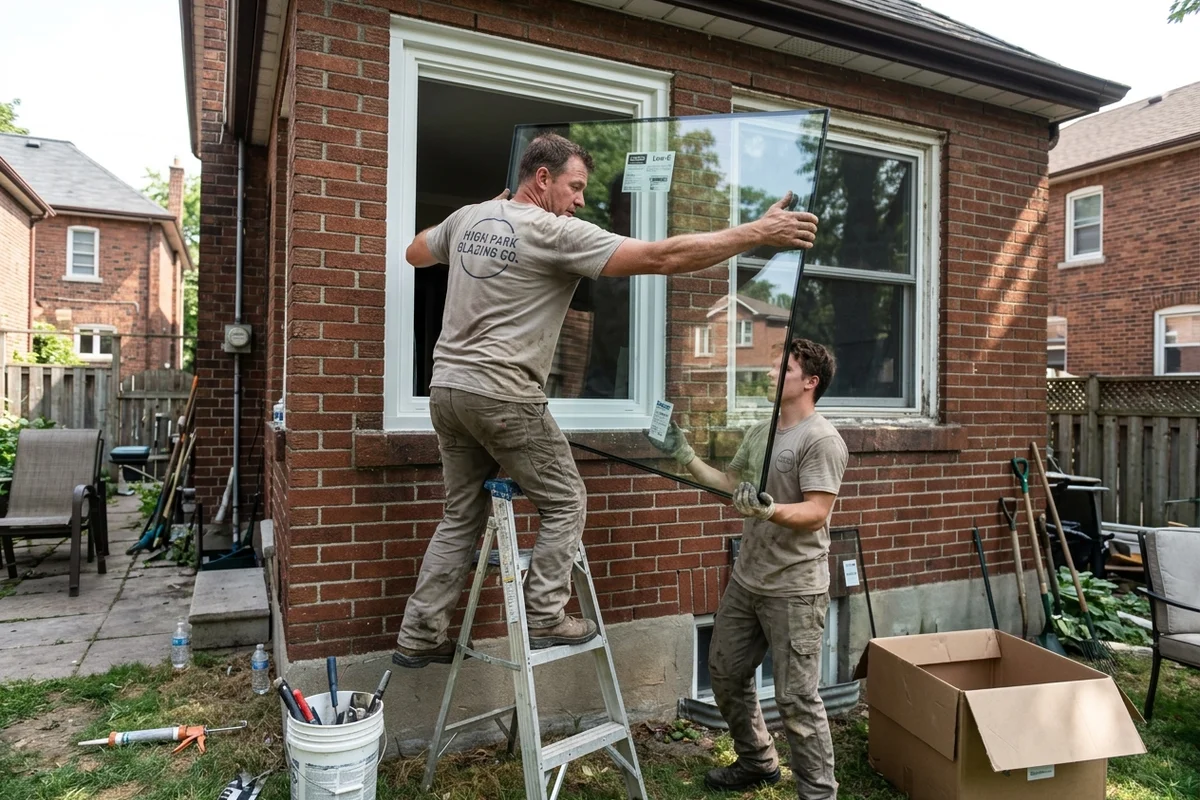
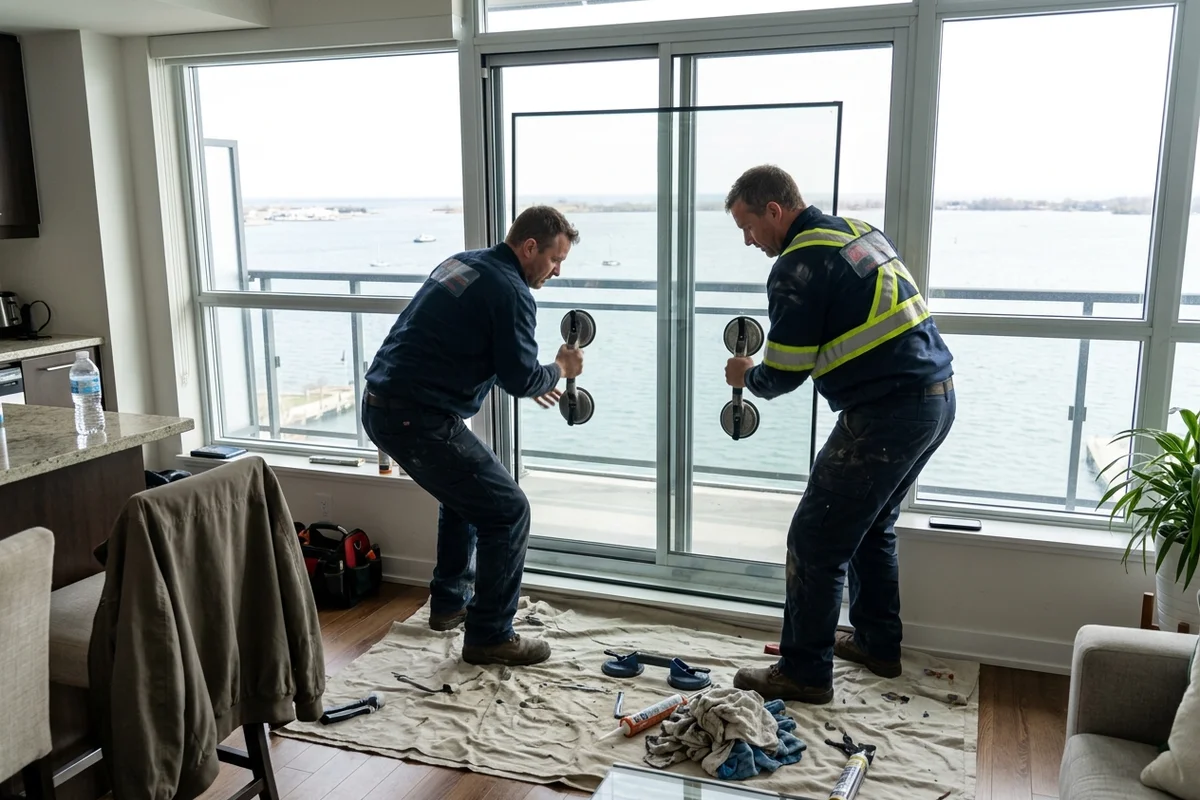
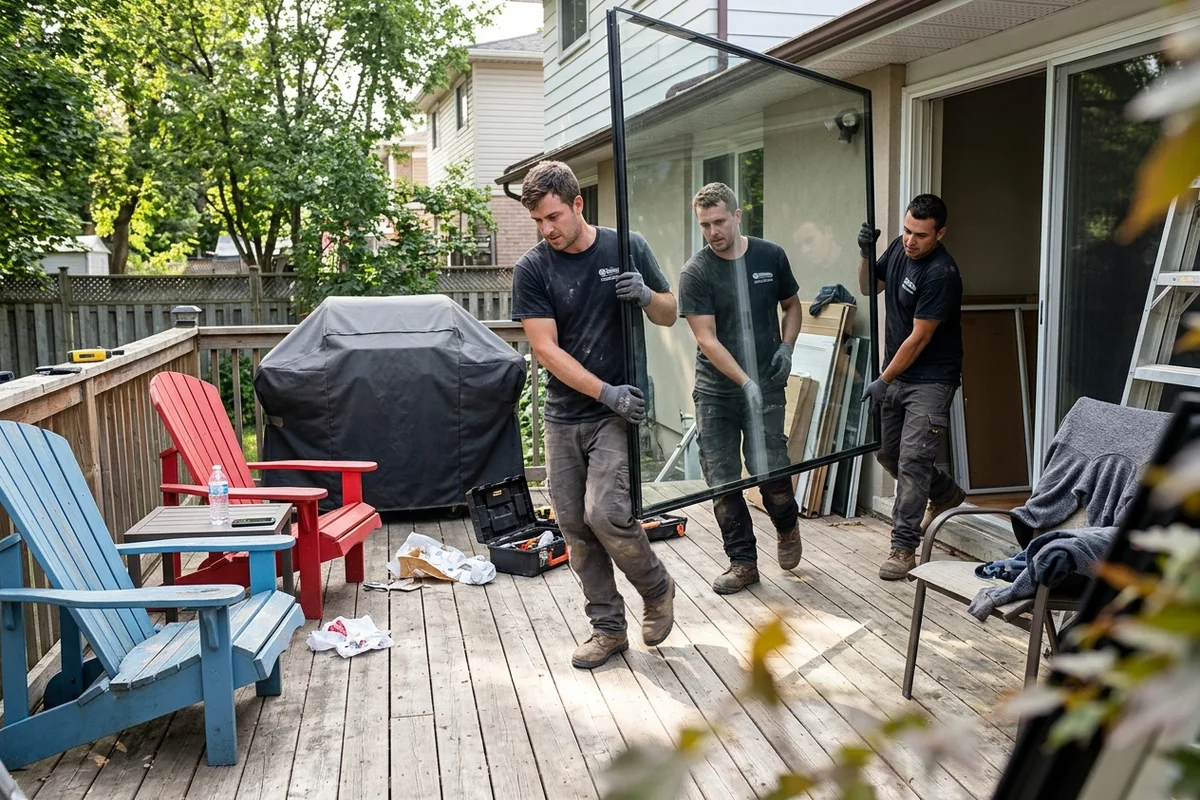
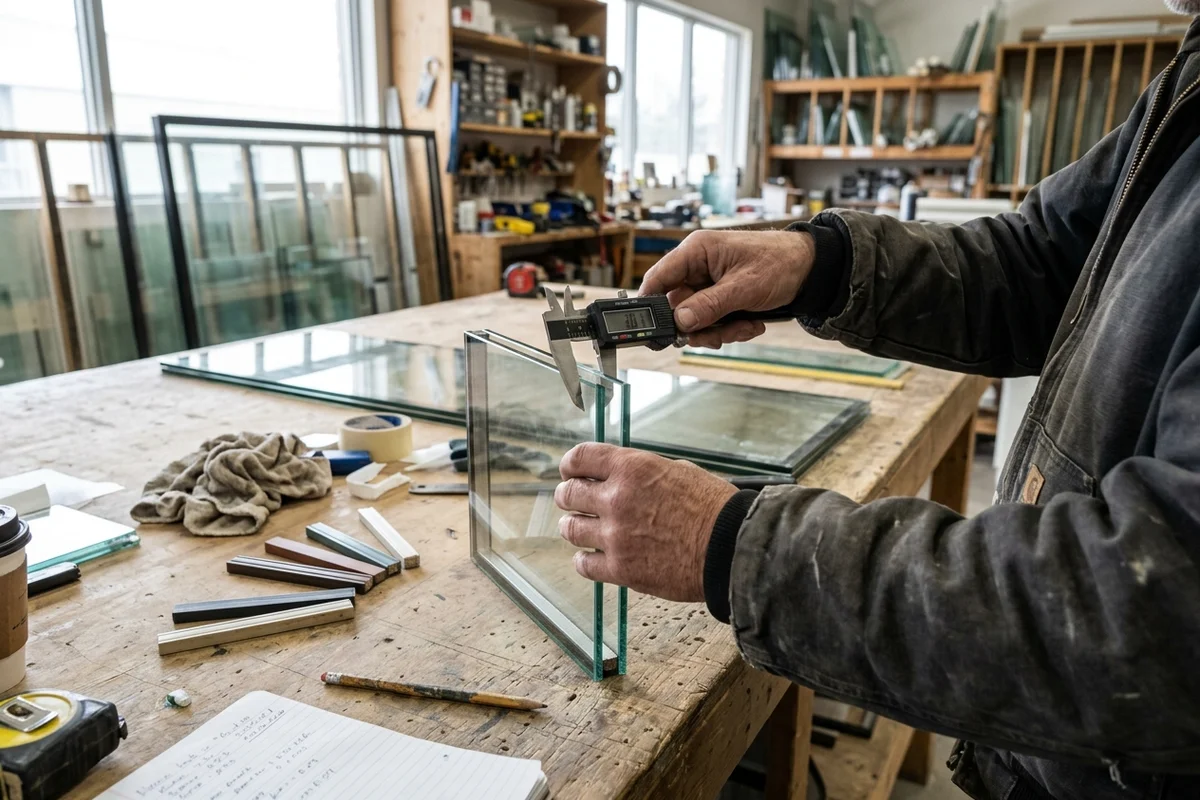
Double-pane glass replacement is ordering and installing a new double-glazed sealed unit, built to the exact specification your window needs. It is the same work as window glass replacement, but for buyers who care about the build: lite thickness, gap width, coating, gas, spacer and seal.
Getting those details right is the difference between a unit that lasts 25 years and one that fogs in 8. It is also the difference between a unit that drops cleanly into your sash and one that has to be forced, which is how glass gets cracked on install day.
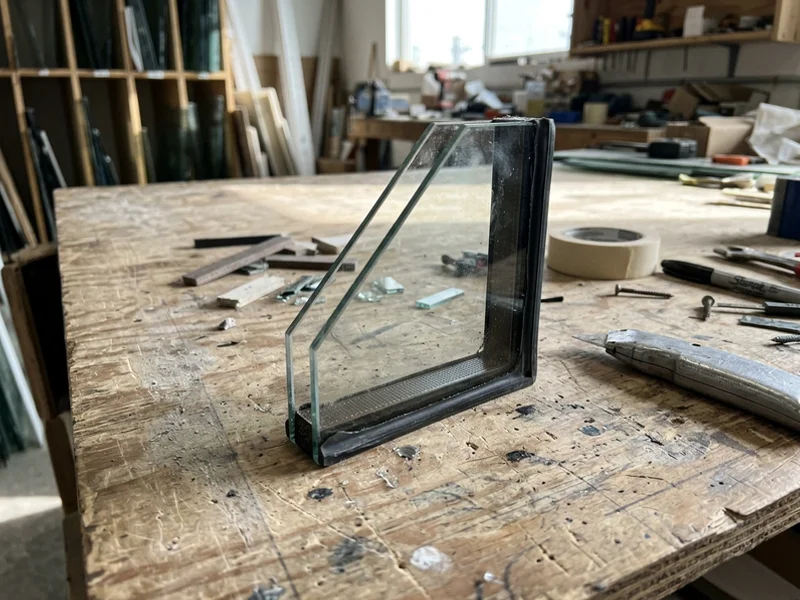
Anatomy of a Double-Pane Unit
| Component | What it does | What we use |
|---|---|---|
| Outer lite | Faces the weather | 3mm, 4mm or 5mm float, tempered where required |
| Gap | Insulating space | 12-20mm, Argon filled |
| Low-E coating | Reflects heat back into the room | Guardian ClimaGuard or Pilkington OptiTherm |
| Inner lite | Faces the room | Matched thickness, coating on surface 3 |
| Spacer | Holds lites apart | Warm-edge, colour matched to frame |
| Primary seal | Gas and moisture barrier | Butyl (polyisobutylene) |
| Secondary seal | Structural bond | Silicone |
The Two Builds We Use Most
3/16/3 is the standard residential build in the GTA. Two 3mm lites and a 16mm gap give 22mm overall, which fits most vinyl casements and sliders made since the 1990s. It is light, efficient and the most affordable.
4/19/4 uses thicker 4mm lites and a wider 19mm gap for 27mm overall. It is stiffer, quieter and handles larger openings without deflecting in the wind. Many newer windows and most picture windows over about 16 sq ft use it.
We build other specs too, like 5/16/5 for very large units or a laminated outer lite for noise on busy streets. The rule is simple: the new unit matches the overall thickness your sash was designed for.
Common Spec Mistakes
These are the mistakes we see when other installers have been in before us:
- Wrong overall thickness. The unit is forced into a pocket that is too tight, or rattles in one that is too loose.
- Low-E on the wrong surface. The coating faces outward and the window loses heat instead of keeping it.
- No setting blocks. The unit sits on the frame and the bottom edge carries all the weight. Seals fail early.
- Aluminium spacer on a new unit. Cheap and cold, with frost along the bottom edge every winter.
- Plain glass where tempered is required. A code problem near doors, floors and tubs.
Why the Spec Is on the Quote
Every quote we write lists, unit by unit, the size, the lite thicknesses, the gap, the coating and which surface it goes on, the gas, the spacer type and colour, and whether any lite is tempered. That way you, your contractor or your property manager can check exactly what is being built before anything is ordered.
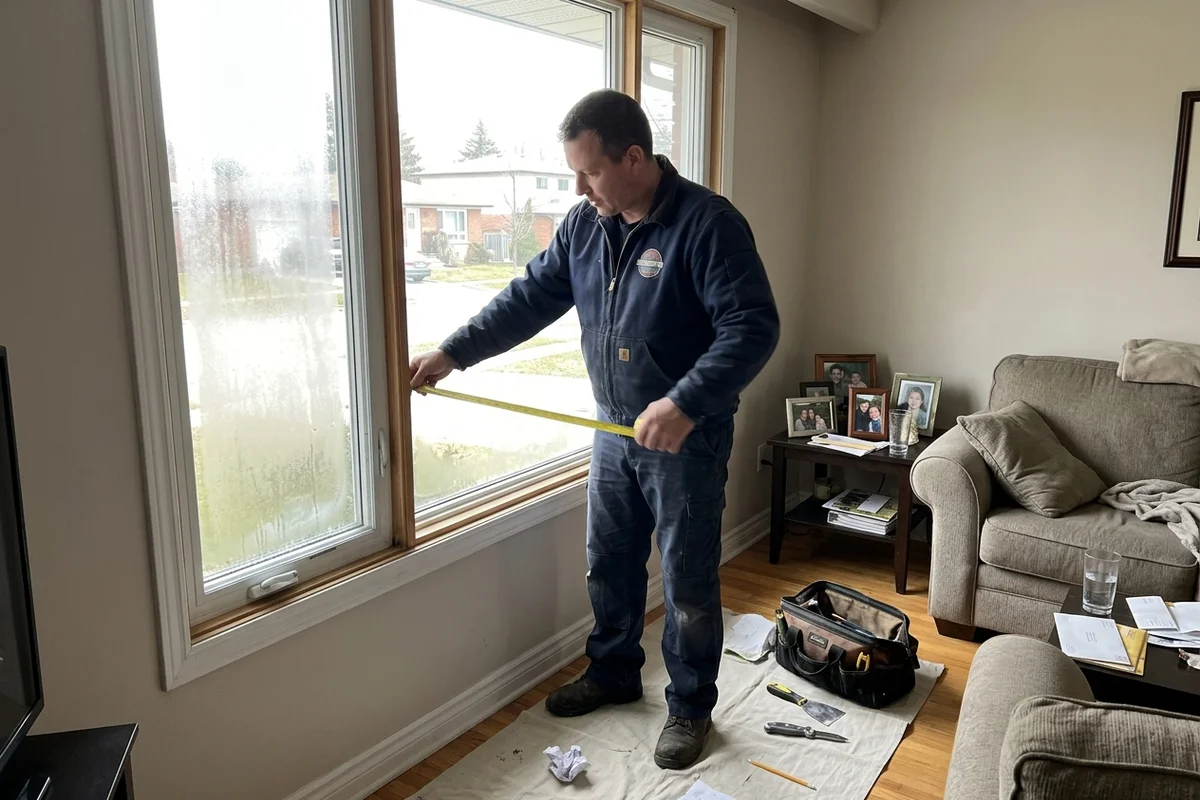
If you already know your spec, send it to us with sizes and we will price it. If you do not, our Toronto glass repair crew will measure and spec it for you.
Written by The Elite Glass Repair Toronto Crew. Last updated .